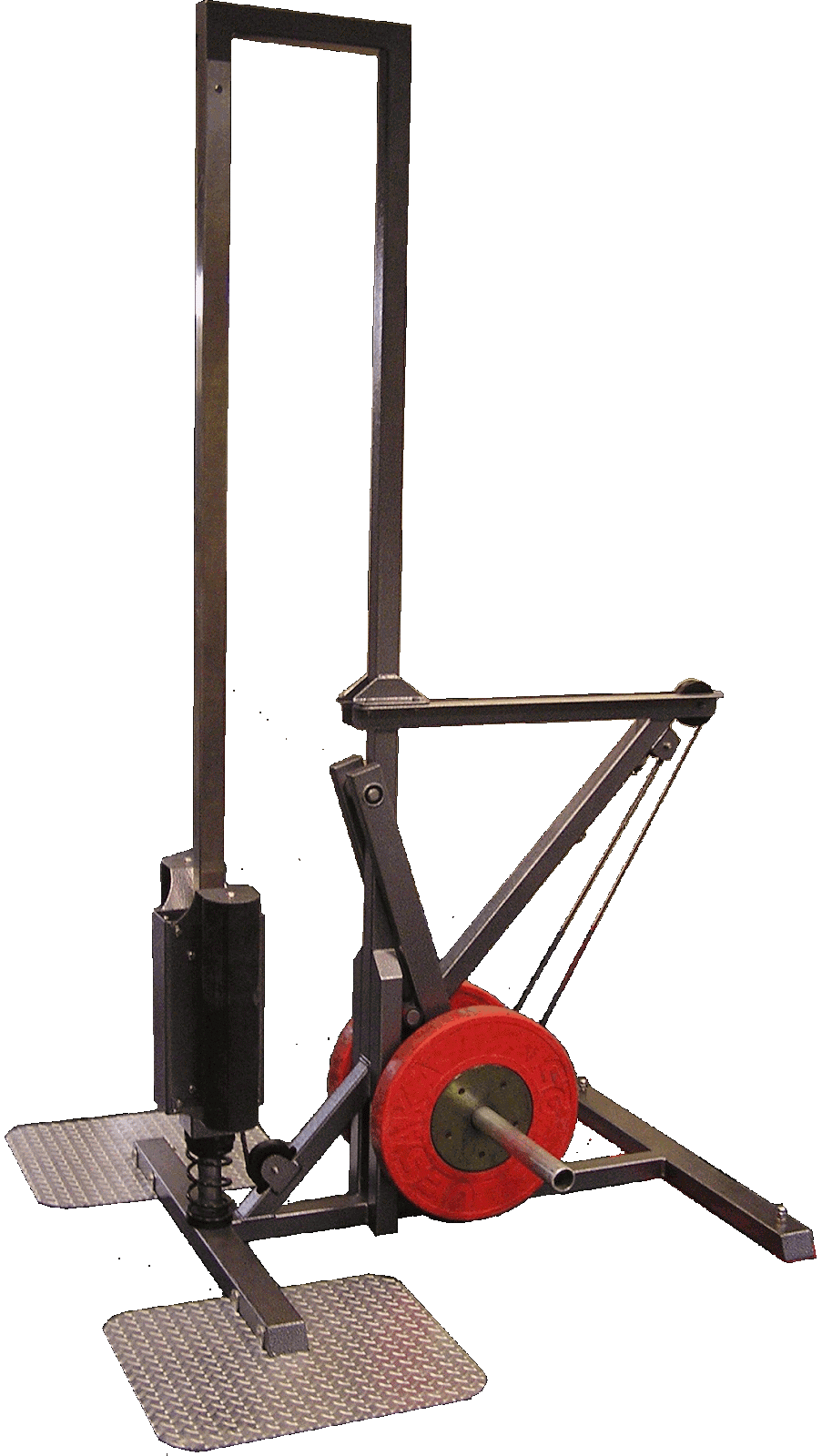
drawings of muscles and exercise apparatus
Showing posts with label MyoQuip. Show all posts

Wednesday, June 13, 2012

Gloucester & Worcester Rugby Clubs choose MyoQuip strength equipment

Gen3 Kinematics are delighted to announce they have agreed deals with both Worcester Warriors and Gloucester Rugby to supply them with their unique MyoTruk and MyoThrusta strength training systems.
Gen3's Chief Executive, Alasdair Naisbitt says: "With nearly half of the Aviva Premiership now using MyoQuip technology, as well as the England national team, we are sure to see the benefits associated with our equipment increasing every season. Exeter have been leading that charge, having been the first to take it on when they were promoted 2 years ago. Their progress in that time has been nothing short of phenomenal."

Gen3 Kinematics is thrilled that they will be associated with two of the strongest teams in English rugby. Business development manager, Andy Naisbitt says: "We are delighted to achieve deals with both Gloucester and Worcester. It is great to have the recognition from these clubs to the benefits they have received through the use of our equipment."

The MyoTruk and MyoThrusta utilise unique state-of-the-art technology that eliminates biomechanical disadvantage in the lower limb triple extension movement, leading to safer and more effective strength training.

For further information please email: info@gen3kinematics.com (Europe) or info@myoquip.com.au (Australia)

Read more...

Tuesday, May 29, 2012

MyoThrusta used with elastic bands

The video below shows a MyoThrusta being used in single-legged mode at the Sydney Uni gymnasium. Note the use of additional elastic bands connecting the weight bar to the machine frame. These are designed to increase tension as the exerciser moves to full leg extension.

The MyoThrusta is being operated by Tom Shaw, a member of Sydney University Rugby Club's Colts squad. Players in the EDS (Elite Development Squad) program such as Tom maintain a heavy weight training program year round, making extensive use of the MyoQuip MyoThrusta and MyoTruk for the development of lower body strength and muscle mass.

Read more...

Thursday, May 24, 2012

Groin injury rehab using the MyoThrusta – a case study from rugby

Groin injuries are a common and frustrating problem for rugby players, frequently involving extended periods out of the game followed by further time in getting back to full match fitness. The MyoQuip MyoThrusta offers the prospect of accelerated recovery of functionality and strength while the body is repairing. The MyoThrusta is a unique type of leg press which combines a supine body position with accommodating resistance giving the exerciser effective loading and muscle fibre recruitment through the whole range of movement. Intensive use of this apparatus enabled Sam Jeffries to get back on the playing field in time to be selected in the Australian Under 20 Squad which is about to travel to South Africa for the World Championships

Sam Jeffries moved from Brisbane prior to the 2011 season to join the Sydney University Rugby Club. During that season he missed the majority of matches due to groin pain and then had to have shoulder surgery last October. This combination of injured areas would have made it extremely difficult to do off-season strength training using conventional exercises. Staff from Sydney University’s Physical Preparation Department and Sports Clinic combined to develop an integrated rehab strategy focussed on the MyoThrusta, Physiotherapist Elias Boukarim explained:

Read more...

Monday, May 21, 2012

England Rugby to continue using the MyoTruk from Gen3


Gen3 Kinematics is happy to announce that they are to continue their relationship with England Rugby to supply them with their unique MyoTruk for the forthcoming Barbarians game.

Having used it previously throughout the 2012 6 Nations series, England have once again requested the use of the machine, having been impressed with the benefits it brings.

England tour South Africa this summer where they will likely face players who have experience of MyoQuip Technology from clubs such as the Natal Sharks and the Golden Lions.

The MyoTruk utilises unique technology that eliminates biomechanical disadvantage in the lower limb triple extension movement, leading to safer and more effective strength training.
For further information please email: info@gen3kinematics.com (Europe) or info@myoquip.com.au (Australia)
Read more...

Wednesday, May 09, 2012

MyoQuip-using Exeter Chiefs consolidate their Aviva Rugby Premiership position

The Exeter Chiefs have just completed a very successful second season in the Aviva Rugby Premiership, building on their 8th position in 2010-2011 to finish 5th and earn a place in the Heineken Cup competition next season.


When the Chiefs were promoted into the Aviva Premiership in season 2010-2011 they were widely tipped to be a one season wonder.They faced a difficult transition to the premier league with no time to buy in players to strengthen their squad and the need to adapt quickly to the greater physicality and speed of play in the top competition.

Fortunately in June 2010 Paddy Anson, Head of Strength and Conditioning with the Chiefs, visited the UK Strength and Conditioning Association Conference where Gen3 Kinematics were exhibiting the MyoQuip range of strength equipment which they had just began manufacturing. Anson was impressed by what he saw and ordered both the MyoTruk and MyoThrusta. The Exeter players took to their new grunt toys with such enthusiasm that Gen3 were compelled to make a couple of modifications to the machines to ensure that they would stand up to the pounding they were receiving from the men from the West Country. During that first season Paddy Anson said:

"We are really pleased with the performance gains that the players have achieved through using Gen3's MyoQuip equipment. Our testing scores have been consistently good by all of the players and the guys are now fitter and stronger than ever. We use their equipment heavily in our programmes and It has definitely helped us improve our performances as we continue to progress in the Premiership. I would recommend Gen3's MyoQuip equipment to anyone."

Reviewing that season Paddy acknowledged that the MyoQuip machines played a pivotal role in dramatically improving the strength and conditioning of the squad. Significantly they resulted in greater leg strength and driving power for both forwards and backs without any reduction in speed - crucial in top class rugby where backs can play like forwards and to cross the gain line you have to be more powerful and stronger. They also reduced the risk of injury in training. One clearly observable benefit was the fact that Exeter were equal top in the competition in terms of points scored in the last 20 minutes of matches.

The Chiefs have pursued a deliberate strategy of building strong links with local colleges and with Exeter University. The University's Director of Rugby, Keith Fleming, feels the success of the Exeter Chiefs has given a big boost to Exeter University Rugby. It used to run 3 rugby sides and now runs 9 and rugby has become the biggest club in the Athletic Union overtaking football.

Keith says, "The University can provide the Chiefs with a ready made pool of talent." To strengthen this pathway the Exeter University Sports Association has bought the same MyoQuip equipment as used by the Chiefs for its High Performance Gym, which has recently been expanded.

"By mirroring the equipment used by the Chiefs - especially the strength and conditioning equipment - we can do the same type of exercises and achieve the speed, strength and power results to meet the Chief's standards which should also reflect in our BUSA performances. It's a win, win association", says Keith.

At the recent Aviva Premiership Rugby Awards the Exeter Chiefs received two awards. Head Coach Rob Baxter was named QBE Director of Rugby for the season while winger Gonzalo Carnacho was declared Gatorade Game Changer of the season, an award based on official statistics for all players such as metres gained, number of carries, turnovers won, and tackles made.

One of the Chiefs' signings for next season is the 33-Test Wallaby Dean Mumm. Dean should have no difficulty working out with the MyoTruk and Myothrusta as he has been a member of the very successful Sydney University Football Club for the past 10 years. The Sydney University gymnasium is where the MyoQuip machines were first developed and tested.
Read more...

Thursday, May 03, 2012

MyoQuip-using clubs to contest Heineken and Amlin Cup Finals

European rugby clubs which have installed MyoQuip machines, the MyoTruk and MyoThrusta, have had stunning success in reaching the Finals of prestigious Cup competitions this season.

The Heineken Cup Final will be an all Irish affair between Ulster and Leinster. Two other Clubs which are MyoQuip users, Exeter and Toulon, have qualified for next year's Heineken Cup.

French Clubs, Toulon and Biarritz, will meet in the Final of the Amlin European Challenge Cup. Exeter were quarter finalists in this competition meaning that 3 of the top 8 teams use MyoQuip machines as the basis of their lower body strength training.

All of these clubs were supplied by MyoQuip's European manufacturer/distributors, Gen3 Kinematics. The sales to Toulon and Biarritz were made by Paul Dearlove who distributes MyoQuip machines throughout France.
Read more...

British cyclists pursue Olympic Gold with the MyoThrusta

In early March Gen3 Kinematics announced that British Cycling would be using the MyoQuip MyoThrusta lying leg press in preparation for the London Olympics.

Track cycling is expected to be one of the sports in which Britain excels at the Games, continuing a fierce rivalry with Australia. At the World Track Cycling Championships held in Melbourne last month Britain and Australia each won 6 gold medals. All other countries competing shared the remaining 7 gold medals. Between them Britain and Australia secured 28 out of the 57 gold, silver and bronze medals awarded, or 49%, with the host nation inching out Britain because of winning 2 more silver medals. On home soil for the Olympics Britain will be hoping to secure the upper hand.

In track cycling times are recorded to the thousandth of a second and winning margins can be extremely small. Not surprisingly national teams continually search for apparatus, equipment and techniques capable of giving them the slightest edge in performance.

The MyoThrusta is the world's most advanced form of leg press with particular application for rehabilitation. It is ideal for use by elite level cyclists whose training involves extreme intensity work undertaken in an unnaturally cramped skeletal position. The MyoThrusta is the only strength builder for the leg extensors providing an appropriate level of muscle activation throughout the exercise movement from extreme flexion to full extension.

Its unique technology ensures high-range muscle fibre recruitment over the full range of limb movement without imposing any adverse loading on the spine, hips or knees, all of which are of course of vital concern to cyclists.


Read more...

Saturday, June 11, 2011

MyoQuip makes its first sale of the MyoTruk in France

Top 14 rugby club Biarritz Olympique Pays Basque (BOPS) has ordered a MyoTruk through MyoQuip's French distributor, Paul Dearlove (pictured). Paul is also captain of Section Paloise (Pau Rugby Club) which plays in the Pro D2 French League. The machine is being supplied through the MyoQuip  manufacturing distributor for Europe, Gen3 Kinematics.

Read more...

Thursday, May 26, 2011

Preview of a new machine in the MyoQuip range


This is the first image of the MyoLifta, a revolutionary new machine specifically developed for the sport of rugby football. It is designed to improve the lifting ability of players lifting and supporting jumpers in the lineout. It can be operated singly or by two players working together.

More details and images will be available very shortly.
Read more...

Thursday, December 09, 2010

Myoquip Myotruk Resistance Training Machine

by Tom Carter

(Article adapted from an assignment submitted in the course, Applied Biomechanics in Strength and Conditioning, in the Masters of Exercise Science (Strength and Conditioning) program at Edith Cowan University)

Abstract

The MyoTruk accommodating resistance machine promotes strength and power training development for the muscle groups responsible for triple extension. The MyoTruk, one of MyoQuip's “Myo-” range of strength equipment, embodies direct-linkage force transmission and replaces the ScrumTruk. Since its introduction in 2004 the ScrumTruk has been routinely used for enhancing the basic strength, muscle mass and explosiveness of rugby union players of all levels and ages. This paper examines the MyoTruk and its capacity to facilitate strength, power and speed development, whilst concurrently comparing it to traditional weight training exercises such as variations of the squat and Olympic type lifts. It examines the MyoTruk’s capacity to enhance the physiological capacities of athletes within the game of rugby union.

Kinematic features and performance characteristics of the MyoTruk

MyoQuip’s mission is to develop fundamentally innovative resistance training equipment with a particular focus on lower body power and core stability development. Each individual machine embodies Broad Biomechanical Correspondence (BBC) technology with a specific focus upon:

1. Strength development exercises that promote the kinematics of triple extension

2. The activation and strengthening of specific muscle groups throughout the entire range of motion

3. The development of speed and power capacities specific to particular sports.
Figure 1: The MyoQuip MyoTruk triple extension strength/power training machine

The two most critically distinguishing features of the MyoTruk are the horizontal pushing position of the athlete and the use of MyoQuip's BBC technology, ensuring constantly increasing resistance throughout the range of the exercise movement.

The MyoTruk is a very effective strength and power training alternative and/or complement to the barbell squat in building strength in the gluteal, hamstring and quadriceps muscle groups. In addition to its unique consistent resistance training throughout range the MyoTruk also reduces the compressional forces on lower back that can be attained at times by traditional squatting exercises.(4) Figure 2 below illustrates the biomechanical starting position of the MyoTruk. The hip and knee joint starting angles are able to be adjusted to below 90° if a greater range of movement is desired, but as discussed the integral component of the machine is the ability of the back and spine to maintain normal curvature. (24)

Figure 2: Kinematic and biomechanical features of the MyoTruk - Tom Carter demonstrating starting position for the MyoQuip MyoTruk - note back and shins parallel to ground - hip and knee joint angles at 90º (25)

Figure 3 below illustrates the functional benefits of the MyoTruk as the extension position facilitates the demands of many sports, in particular football codes where extensor strength plays an integral role in the development of speed, power and force characteristics. The triple extension position is able to be attained without the same risks associated with conventional resistance exercise. This perspective is elaborated upon further on within the article.


Figure 3: Tom Carter demonstrating full extension on the MyoQuip MyoTruk - hip and knee joint angles change at same rate. No adverse consequences from attempting to use excessive weight - athlete cannot be trapped under heavy load unlike barbell squat or 45° leg press (25)

The horizontal trunk position stimulates co-contraction of the stabilising muscles of the pelvic and abdominal regions whilst simultaneously providing full-range effective activation of leg extensors from start to complete lock-out.(25) Further, the synchronicity of hip and knee joint angles ensures appropriate distribution of effort between gluteus maximus and quadriceps muscles through extension phases and gluteus and hamstrings during eccentric re-loading phases. The final functional characteristic of the MyoTruk resistance machine is strong activation of the gastrocnemius and soleus muscles of the calf during significant dorsiflexion and plantar flexion of the ankle joint.(25)

MyoTruk’s influence on speed and power development

From a training safety and injury prevention perspective the main mechanical advantage of the MyoTruk compared to squat variations lies in its ability to facilitate below parallel (<90º) resistant training throughout range of motion. Compared to the “sticking point” encountered in squat movements, which often occurs at periods when the lifter is moving from a horizontal thigh position through the sticking point (approximately 30º above horizontal).(19,20) The tendency with the squat for excessive trunk lean predominantly occurs at the lowest point of the squat, when the angle at the hip joint is significantly less than at the knee joint.(20) The great difficulty often facing athletes and their coaches is the ability to develop strength and power through range in the lower body with minimal potential of injury occurring.(10)

Triple extension movements in resistance training can be defined as those that involve the extension of the three major joints: hip, knee, and ankle. These three joints, when moved from the flexed to extended position create the explosiveness needed to apply force with the feet against the ground.(8) Extension movements facilitate the main factor involved in the generation of explosive strength. As such it is widely believed that the triple extension is the most important physiological component for enhanced speed-strength training and development. Speed-strength training is a combination of maximum speed and maximum strength, which combined can produce a tremendous amount of force. This force is what we want on the playing field when the foot hits the ground.(8) This has practical applications to sports specific elements such as running the ball into contact in the game of rugby union.

Traditionally it has been proposed that Olympic lifting exercises such as the snatch and clean and jerk variations facilitated the greatest development of triple extension.

Roman and Shakirzyanov (1978) proposed that:
The explosion during an Olympic lifting exercise is executed by the simultaneous action of the muscles of the legs and torso… From this position, the athlete extends his legs and torso and rises up onto his toes and…the shoulders are elevated…Such a position is the most advantageous condition for maximal utilization of the participating muscle groups and the subsequent transfer to the barbell upward.(21)

However the MyoTruk resistance-training machine provides a significant and contemporary alternative to the traditional Olympic lifting methods which have been proposed to enhance triple extension. Not only does the MyoTruk enhance triple extension with increased efficiency of movement; it involves a significantly less intensive time period spent learning complex movement patterns that occur in Olympic weightlifting exercises. The MyoTruk facilitates triple extension development both through traditional strength training paradigms and also dynamically without the same impacts on time limitations of the athlete and coach, the central nervous system and the musculosketal system.

When developing speed and power the muscles of the hip extensors are of the most critical importance because they are usually the weak links in the large majority of athletes.(3) These muscle groups, in particular the glutes, hamstrings, and those of the lower back, are specifically targeted and developed by the MyoTruk. The primary goal of maximal strength exercises is to increase the force or strength producing capabilities of muscles. Through developing strength with various speeds throughout range of motion, the athlete has a subsequent increase in the contractual force producing capabilities of the muscles that are involved in the movement and consequent sporting performance.(3) The MyoTruk allows consistent resistance to be moved throughout range and as such has significant sports specific and functional training connotations. Heavy resistance training results in increases in the contractile rate of force development (RFD), impulse and efferent neuromuscular drive of human skeletal muscle allowing for subsequent transformation into enhanced sports specific speed and power characteristics.(1)

A distinguishing characteristic of the MyoTruk in terms of strength training lies in its ability to be eccentrically controlled so efficiently throughout range whilst the athlete maintains normal lumbar curvature. This has further positive implications for the ability of the MyoTruk to generate strength and power development. Eccentric deceleration is integral in absorbing a load as well as enhancing the elastic potential of the muscle.(14) The elastic energy stored in the series elastic elements (which includes the tendons, the aponeuroses, cross-bridges, actin, myosin filaments and the giant protein Titin) in the eccentric phase is re-used during the concentric phase.(22)


Sports specific connotations: the MyoTruk and the game of rugby union

Dynamic strength is defined as the maximal ability of a muscle to exert a force or torque at a specified velocity.(20) Explosive muscle strength can be defined as the rate of rise in contractile force at the onset of contraction.(1) Rugby union is a dynamic and explosive strength-based sport involving a significant number of collisions both in attack and defence. Successful performance in rugby union is significantly influenced by the physiological capabilities of the athlete; therefore performance can be significantly improved through the implementation of an effective resistance training program. An effective resistance training program should be run in conjunction with dynamic sport specific training. The ability to be able to produce force throughout time (impulse), possess dynamic strength capacities at contact situations and utilise a vast array of different speed attributes are all critical features within the game of rugby union. Figure 4 illustrates the manner in which heavy resistance strength training and ballistic plyometrics have the ability to positively interact with the force time curve and further enhance the strength attributes defined above:


Figure 4: Isometric force: time curve indicating maximal strength, maximal rate of force development, and force at 200 ms for untrained, heavy-resistance strength-trained, and explosive-strength-trained subjects.(11,12)


The MyoTruk resistance-training machine facilitates the development of maximal rate of force development (MFRD) through enhancing the dynamic and explosive strength capacities of the athlete. Through using the MyoTruk both ballistically and through a normal range of speed a variety of aspects along the force/time curve are able to be enhanced. The MyoTruk has the capacity to be used as a vehicle that can extend the force/time curve both vertically and horizontally improving a variety of capacities simultaneously and/or individually. Specifically regarding the game of rugby union, the greater the capacity of the athlete to produce force within the initial <150ms, the greater the ability to create advantageous situations. An enhanced ability to generate speed, power and forceful movements repeatedly over time provides a significant advantage both in attack and defence within a game.(23) This perspective is further enhanced with the continued development of such strong defensive systems and patterns within the modern game leading to the dominance of such orientated teams. However the ability to break these systems down through enhanced physiological capabilities provides a significant opportunity to greatly influence the nature of how the game of rugby union is actually played.(6)

The development of maximal strength of both the agonist and antagonist muscle groups, particularly in the lower limbs is important within the game of rugby union.(26) The role of eccentric strength training in power development was mentioned previously but obviously the strength development of antagonist muscles should not be neglected for athletes who require rapid limb movements, as research suggests enhanced strengthening of the agonist muscles increases both limb speed and accuracy of movement as well as further enhancing positive alterations in the neural firing patterns.(14) This in conjunction with maximal strength training significantly enhances the capacity of the stretch-shorten cycle (SSC).(22)


The MyoTruk effectively enhances power and speed development, and in particular the SSC, through the kinematic structure and motion of the machine not only through eccentric motion but more specifically for the ability to develop sport specific ballistic and explosive extensor strength development as previously discussed after a pre load effect and through a variety of different ranges (above or below 90º in thigh angle). This has practical applications for not only ball carrying and scrummaging facets within the game of rugby union but also at breakdown contests as well.

• Players covered on average 6,953 m during play (83 minutes). Of this distance, 37% (2,800 m) was spent standing and walking, 27% (1,900 m) jogging, 10% (700 m) cruising, 14% (990 m) striding, 5% (320 m) high-intensity running, and 6% (420 m) sprinting.

• Greater running distances were observed for both players (6.7% backs; 10% forwards) in the second half of the game.

• Positional data revealed that the backs performed a greater number of sprints (>20 km•h-1) than the forwards (34 vs. 19) during the game. Conversely, the forwards entered the lower speed zone (6-12 km•h-1) on a greater number of occasions than the backs (315 vs. 229) but spent less time standing and walking (66.5 vs. 77.8%)

• Players were found to perform 87 moderate-intensity runs (>14 km•h-1) covering an average distance of 19.7 m (SD = 14.6). Average distances of 15.3 m (backs) and 17.3 m (forwards) were recorded for each sprint burst (>20 km•h-1), respectively.

• Players exercised at <80 to 85% Vo2max during the course of the game with a mean heart rate of 172 b•min-1 (<88% HRmax)


Table 1: The physiological demands of the game of Rugby Union (5)


Further, the kinematic motion of the MyoTruk has positive implications on the functional demands of sprinting within the game of rugby union (See Table 1 above) for detail on the physiological demands of the game. The speed at which a player begins to sprint can affect the body position with the game at certain times. Data shows that forwards perform 41% of all accelerations from a standing start, 21% from walking and only 6% from striding.(6) In order to maximise acceleration from a standing start, a low body position is needed. Therefore the ability to generate strength and force in a horizontal fashion throughout range of the exercise provides distinct functional advantages of forwards using the MyoTruk as a resistance-training machine in their particular athletic development. Backs have also been shown to perform 29% of all sprints from a standing start; however they also perform an average of 8 sprints more than forwards do from a striding start.(6)

The ability to generate force off the mark and extensor strength is still critical and thus maximal strength properties obtained through use of the MyoTruk would benefit performance greatly. The type of start initiating the sprints can also affect different muscular recruitment patterns. Short sprints from a standing start involve the quadriceps muscles more and require high relative strength, whereas when a player approaches top speed the hamstrings are strongly recruited.(10) The nature of the game can also affect body positions in preparation to sprint. For example, using a blitz-like defence requires a low body position to maximise speed over 5-10 m. Reactive support play, however, requires a more vertical body position as the player is probably already maximally accelerating to keep pace with the attacking ball carrier.(6)


References

1. Aagaard, P and Andersen, J.L (1998) Correlation between contractile strength and myosin heavy chain isoform composition in human skeletal muscle. Med Sci Sports Exerc 30:1217-1222


2. Astorino, T. and Kravitz, L. (2001) Glycogen and Resistance Training. IDEA Personal Trainer No.4

3. Baggett, K (2007). The Vertical Jump Development Bible. Higher Faster Sports, 3rd Edition.

4. Campbell C. and Muncer, S.J (2005). The cause of low back pain: a network analysis. Social Science and Medicine 60:409–419.

5. Cunniffe, B., Hore, A.J., Whitcombe, M.J., Jones, K.P., Baker, J.S and Davies, B. (2009). Time course of changes in immuneoendocrine markers following an international rugby game. European Journal of Physiology

6. Duthie, G.M., Pyne, D.B., Marsh, D.J. and Hooper, S.L. (2006). Sprint patterns in rugby union during competition. J Strength Cond Res. 20(1):208-14.

7. El-Abd, J. (2005). An objective time-motion analysis of elite rugby union. Sports Medicine, 33(13):973-991.

8. Escamilla, R.F. and Garhammer, J. (2002). “Biomechanics of Powerlifting and Weightlifting Exercises.” Exercise and Sports Science. Eds. Garrett and Kirkendale. Lippincott, Williams and Wilkins. p 585-615.

9. Fitts, R.H, Mc Donald, K.S., and Schluter, J.M. (1991). The determinants of skeletal muscle force and power; their adaptability with changes in activation pattern. Journal of Biomechanics 24,1:111-122

10. Francis, C (2002). Charlie Francis 2002 Forum Review, (e-book) available from CharlieFrancis.com

11. Hakkinen, K. and P.V. Komi, 1985a. Changes in electrical and mechanical behaviour of leg extensor muscles during heavy resistance strength training. Scand. J. Sports Sci 7:55-64.

12. Hakkinen, K. and P.V. Komi, 1985b. The effect of explosive type strength training on electromyography and force production characteristics of leg extensor muscles during concentric and various stretch-shortening cycle exercises. Scand. J. Sports Sci 7:65-76.

13. Hutton, R. S (1992). Neuromuscular basis for stretching exercises in Komi ed. Strength and Power Training for Sport, Blackwell, and London.

14. Jaric, S., Rupert, M. Kuok, and D.B.Ilic. (1995) Role of agonist and antagonist muscle strength in rapid movement performances. European Journal of Applied Physiology. 71:464-468

15. Kraemer, W.J and Hakkinen, K (2002). Strength training for sport.

16. Kraemer, W. J and Newton, R. U. (1994). Training for improved vertical jump. Sports Science Exchange, 7(6):1-12

17. McLaughlin, T.M. (1975). A kinematic analysis of the parallel squat as performed in competition by national and world-class powerlifters. Microform Publications. Eugene: University of Oregon, College of Health, Physical Education and Recreation.

18. McLaughlin, T.M., Dillman, C.J. & Lardner, T.J. (1977). A kinematic model of performance in the parallel squat by champion powerlifters. Medicine and Science in Sports, 9:128-33.

19. McLaughlin, T.M., Lardner, T.J. & Dillman, C.J. (1978). Kinetics of the parallel squat. The Research Quarterly, 49:173-89.

20. Moore, R.L and Sully, J.T (1984) Myosin light chain phosphorylation in fast and slow skeletal muscle in situ. Am. Journal of Physiology. 143:257-262.

21. Nindl, B.C., Kraemer, W.J., Marx, J.O., Arciero, P.J., Dohi, K., Kellogg, M.D. and Loomis, G.A. (2001) Overnight responses of the circulating IGF-1 system after acute, heavy resistance training. Journal of Applied Physiology 90:1319-1326.

22. Rimmer, E and Sleivert, G (2000). Effects of Plyometric Intervention Program on Sprint Performance. J Strength Cond Res14(3):295-301

23. Roman, R.A. and M.S. Shakirzyanov. (1978) The Snatch, The Clean and Jerk. Moscow: Fizkultura I Sport, English translation Andrew Charniga Jr. Livonia: Sportivny Press.

24. Ross, B. (2004). Squat or ScrumTruk: which is best for leg extensor training for athletes? http://myoquip.com.au/Squat_or_ScrumTruk.htm

25. Ross, B (2006). A biomechanical model for estimating moments of force at hip and knee joints in the barbell squat. http://www.myoquip.com.au/Biomechanical_model_squat_article.htm

26. White, C (2006). Charlie Francis.Report from 1-1 Internship with Craig White (2nd April – 11th April)

27. Worrell, T.W. (1994). Factors associated with hamstring injuries. Sports Medicine 17:338-345.

28. Wolfe, R.R. (2001). Control of Muscle protein breakdown: effects of activity and nutritional states. International Journal of Sports Nutrition and Exercise Metabolism 11:164-169

Read more...

Tuesday, October 26, 2010

Aussie coach introduces MyoQuip systems to British rowing

London Rowing Club coach Phil Bourguignon
London Rowing Club coach Phil Bourguignon has persuaded the club to instal the equipment that helped make his previous club, Sydney University, the leading rowing club in Australia. London RC recently became the first European rowing club to use the revolutionary MyoTruk and MyoThrusta machines as the basis of their strength conditioning.

After four very successful years as Director of Rowing at Sydney University Boat Club, Phil Bourguignon was looking for a new challenge. He found it in the Thames-side London Rowing Club, thus moving between two of the world’s oldest rowing clubs. SUBC had been founded way back in 1860 but LRC is even more venerable dating from 1856.

It is typical of Bourguignon that he took no time off between finishing up in Sydney in December last year and moving into the boat house at Putney. Back in Australia, juggling club and national team commitments, he had coached year round refusing to take vacations. In 2006 he was quoted as saying: “They say I’ve got four weeks off, but no … Athletes, their bodies don’t know what time off is. They’ve got to be trained every day. Athletes don’t know when holidays are.”

His work schedule was unrelenting, involving 15-hour days during the week, waking at 4:30 am and getting home at 8 pm. And he had no reprieve at weekends. His only free time was on Sunday afternoons when he often accompanied his mates out for a quiet beer but he was so exhausted that he often fell asleep after the second beer.

“Fortunately, I love waking up every morning,” Bourguignon said. “I love it because I’ve got such a great diversity of athletes, that I’m seeing something new every day. I see a change in somebody that wasn’t there yesterday and I say, ‘Yes! Thank God, that’s it, stay with that.’

“And you really look forward to waking up to see that.”

A feature of the Bourguignon approach was to strive to stay upbeat and full of energy in front of his athletes so they would act likewise.
Phil Bourguignon monitoring MyoTruk technique at Sydney University
“If I’m enthusiastic, they’ll be enthusiastic,” he said. “If I’m tired and morbid, there’s no way they’ll working hard. I can change the way they act in the boat shed by the way I act.”

He was renowned for never going out, preferring to stay home and watch video of his athletes so he could prepare them as best he could for their next challenge. When the athletes worked out in the gym during the afternoon, Bourguignon stood by their side, offering advice on how they could improve.

“I enjoy working with people’s psychology; I enjoy working to understand how people interpret things, how to make them tick and make them go better, just in their mind,” Bourguignon said. “I like working with a variety of people.”

He learnt how to focus on detail during a year he spent at the Australian Institute of Sport as a scholarship coach before coming to the SUBC. At the AIS Bourguignon learned how to coach precisely, how to coach every stroke. As he put it, he learned about “finding the inch that’s gonna win the race.”

For an unashamed workaholic, London Rowing Club offers the ideal environment. Bourguignon’s apartment is right above the boathouse.

At Sydney University Bourguignon coached rowers to win World Championships and Olympic medals. At London his focus is much more on medalling at Henley. Instead of coaching university students, his new charges typically work long hours in the professions or in the City. Consequently their training has to be much more concentrated. This is where Bourguignon sees the two MyoQuip machines as invaluable, enabling heavy strength work to be done very intensively and safely:

"After a long session on the water, backs are fatigued. Therefore, squatting after rowing is very dangerous. With the use of the MyoThrusta and the MyoTruk systems, athletes can still do their heavy weights after a long and hard session on the water." He noted that in Sydney he had “employed the MyoThrusta and the MyoTruk heavily in my training programs with athletes rowing at elite levels. I have not had one back injury to my athletes in 2 years of heavy training"

Back injuries tend to be endemic among elite rowers but there is the need to constantly strive for increased strength. Phil Bourguignon believes that he has found a means to avoid one while achieving the other:

"With rowing heavily involving the legs and core muscles, squatting alone provides many problematic issues such as an athlete not being able to support heavy weights through their core muscles. MyoQuip systems can do the extra weights without worrying about the core muscles, which provides more strength gain without the worries of injuries to the back.

"When athletes get too strong for their skeletal frame and core stability in squatting, they can use the MyoThrusta and the MyoTruk to increase strength safely where they can add far more weight than they are able to squat without the risk of injuring their back."


His name indicates Gallic ancestry but Phil Bourguignon’s broad Aussie accent gives the lie to that. It will be interesting to see what impact the boy from Brisbane has on Thames-side rowing.

(MyoQuip systems are now manufactured in England and distributed throughout Europe by Gen3 Kinematics who supplied the MyoThrusta and MyoTruk to London Rowing Club)

Read more...

Monday, August 09, 2010

First Made-in-England MyoThrusta ready for shipment

Gen3 Kinematics, European distributors of the MyoQuip range of strength increasing equipment, have commenced the roll-out of machines manufactured at their facility in Farnborough, Hampshire.

The photo at left shows the first English-built MyoThrusta ready for packaging and delivery. Within the next few weeks more MyoThrusta and MyoTruk machines will be delivered to rugby and rowing clubs in England.

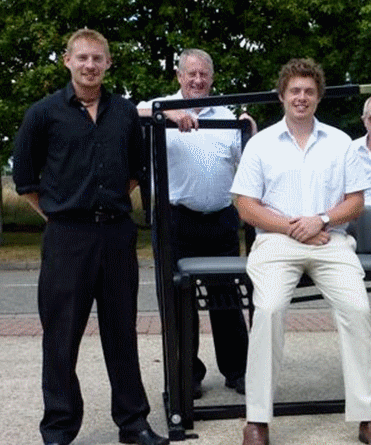
Mr Graham Naisbitt (shown at centre below), managing director of the three-generation parent company Gen3 Systems Ltd says that this new venture is a continuation of his company's commitment to British manufacture:

"Over the years too many proud British manufacturing companies have been forced to close or become mere importers of products made in low wage countries.

"As a family we are determined not to go down that road. We are totally committed to local manufacture, believing that with truly innovative products quality control and responsive and professional service back up are paramount."


Graham's sons, Alasdair and Andrew (shown left and right in the photo) are respectively CEO and Business Development Manager of Gen3 Kinematics. Alasdair says:

"Initially our main focus will be on marketing to clubs and schools in England, but before long we intend to have MyoQuip systems being used throughout Europe.

"We will be continually introducing new equipment to the MyoQuip range. Going forward we want Gen3 Kinematics and MyoQuip to be the brands that come to mind whenever anyone thinks about new ideas in physical conditioning."

Read more...

Thursday, July 08, 2010

The ScrumTruk - an integral part of the Auckland strength and conditioning program

In November 2005 Auckland Rugby, through their then coach Pat Lam, installed a ScrumTruk, one of the first Myoquip machines to be exported from Australia. Now, almost five years on, the machine is still helping the Auckland squad in developing "strength and flexibility through the hips, back and shoulders"

The current strength and conditioning coach at Auckland is Simon Kent, proprietor of Dynamic Fitness Solutions. Simon sees the ScrumTruk as a very flexible tool for developing players:

"I use it with the boys in a number of different ways. It's a great way of teaching good body position especially for our young players. For the front row boys we load up the weight and the boys practice their engagement, with the heavy weight they can hit and 'squeeze' holding the position in an isometric hold.

"The more I am involved with the physical preparation of rugby athletes the more I believe in the importance of having strength and flexibility through the hips, back and shoulders. This enables the athlete to apply force more efficiently on the rugby field, the ScrumTruk is one tool that helps develop hip and back strength.

"The ScrumTruk allows me to teach correct scrum set-up and pushing position especially to our young athletes, for our more established athletes, the ScrumTruk provides a rugby specific strength training tool. ScrumTruk is a integral part of the Auckland strength and conditioning program."

The ScrumTruk has now been superseded in the MyoQuip range by the more advanced MyoTruk, but it still continues to give good service for a range of users internationally.
Read more...

Wednesday, May 05, 2010

MyoQuip manufacturing hub shifts to Britain

Innovative Australian strength equipment company, MyoQuip Pty Ltd, is shifting its main centre of operations to the UK following the appointment of Farnborough-based Gen3 Kinematics as its exclusive manufacturing licensee for the European Union.

MyoQuip was initially established to exploit the invention of a fundamentally unique method of developing pushing power of rugby forwards. Its first product, the ScrumTruk, was adopted by the Wallabies, each of the Australian Super 14 franchises, other rugby clubs, universities and private schools and colleges.

The ScrumTruk employed MyoQuip’s Broad Biomechanical Correspondence (BBC) technology which operates as a compensation mechanism for biomechanical disadvantage. For example, in the bottom range of the barbell squat, the hip and knee joint muscles operate at a considerable biomechanical disadvantage but then move into progressively more advantageous orientation as the exerciser rises. By contrast the BBC technology provides effective loading and high-range muscle fibre recruitment throughout the whole range of the exercise movement.

Taking advantage of its links to Sydney University’s 300 sporting scholarship holders, MyoQuip has refined and expanded its range of equipment now employed for many different sports, making it ideal for users such as the New South Wales Institute of Sport. At Sydney University machines such as the MyoTruk and MyoThrusta are routinely used for strength enhancement and injury rehabilitation by world champions and Olympic medallists in rowing and women’s basketball.

Gen3 Kinematics is a newly formed division of Gen3 Systems Limited, a financially independent, family owned and operated business for over 40 years, now in its 3rd generation - hence Gen3.

Its origins, foundations and future activities are firmly based in engineering. Initially in heavy engineering; 2nd Generation interests developed in the electronics industry resulting in a globally successful operation as both original equipment manufacturers and as specialist distributors.

Now in 2010 the 3rd Generation is offering diversification into specialist health care systems that focus on Kinematic Engineering, specifically “Engineering Solutions for Healthy Living”.

MyoQuip Managing Director Bruce Ross said: “In many ways Australia offers an ideal environment for a company operating in a field such as ours. You have a population with an intense interest in competitive sport, and there is a general willingness to ‘have a go’ and try something new.
Unfortunately there are also disadvantages such as geographical remoteness and limited population.

It is a fundamental principle of business that you go where the market is. For some time we have searched for a suitable European business partner and were extremely fortunate to have been approached by Gen3 Kinematics whose business philosophy meshes so well with ours. The fact that MyoQuip and Gen3 are both family owned companies probably contributes to this.

Their considerable expertise in engineering and electronics will be of great benefit to our partnership.”

Gen3 Kinematics Managing Director Graham Naisbitt said: “We are honoured and delighted to be associated with the hugely successful MyoQuip business and relish the opportunity to develop the market here in Europe. With MyoQuip systems already in use with Northampton Saints, we look forward to exploring opportunities with schools, colleges and universities as well as the rugby clubs in both Union and League but also with many other sports and rehab facilities in rowing, football, in fact with any sport where high level conditioning is important.

This new partnership benefits from having the already well established Gen3 Systems organisation behind it that will permit faster business growth especially with the Olympics so nearly upon us.”

Contact:

Bruce Ross
MyoQuip Pty Ltd
Box 105
Holme Building
University of Sydney
NSW 2006
Australia

Phone: +61 (0)2 9566 4029
Mobile: +61 (0)4 0328 1988
Email: bross@pacific.net.au
Web: http://www.myoquip.com.au/

Graham Naisbitt
Gen3 Kinematics
B2 Armstrong Mall
Southwood Business Park
Farnborough
Hampshire GU14 0NR
UK

Phone: +44 (0)12 5252 1500
Email: sales@gen3kinematics.com
Web: http://www.gen3kinematics.com/

Read more...

Tuesday, September 23, 2008

MyoQuip releases the MyoThrusta leg extensor strength builder

MyoQuip has released the first of its Myo range of strength equipment. The Myo technology embodies direct-linkage force transmission through heavy-duty industrial bearings rather than the cables and pulleys used in our previous models.

The MyoThrusta replaces the HipneeThrust but takes up 40% less floor space and eliminates problems of cable slack and increasing friction with extended operation.

Unique features and performance characteristics of the MyoThrusta:

· Fully recumbent exercise position.

· Comfortable and natural body position throughout the full range of movement ensuring no adverse loading on spine, hips or knees.

· Exercise movement range from extreme flexion of hip and knee joints to full extension.

· Uses MyoQuip’s patented technology providing effective activation of hip and knee extensors over the full range of movement

· Synchronised joint angles distribute load evenly between hip and knee extensors.

· Pin adjustment of the rate of change of load providing multi-functionality of the apparatus.

· Intuitive operation - no requirement for instruction in correct technique.

· No danger of exerciser being trapped under excessive load.

· No stress on ankle joint - no imposed dorsiflexion of the ankle.

· Ideal for rehabilitation of hip or knee joints.


High functionality for developing and strengthening leg extensors

The leg extensors - primarily the gluteus maximus and quadriceps - constitute the body's largest and most powerful muscle group. They are also vitally important for a wide range of athletic and sporting activities.Traditional methods of developing and strengthening leg extensors include the barbell squat and the leg press and leg extension machines. However each of these has significant limitations. They do not adequately exercise the muscles from full flexion to full extension, and there are also issues associated with adverse loading and excessive shear forces on the lumbar region and knee joints.The MyoThrusta has been designed to overcome these problems.

As can be seen in the figure above the athlete operates from a supine position so that the action of the extensors can be effectively isolated. The recumbent position also means that the spine can comfortably cope with the compressive forces generated.The arc through which the foot plate of the machine moves is designed to closely parallel the path that the feet would normally traverse if moved from flexion to extension without resistance. It also creates a natural tendency for the two joint angles to vary synchronously so that they are effectively sharing the load throughout the exercise movement.

Exercises the total range of limb movement

It can be seen that at the start position both hip and knee joints can be tightly flexed. As the feet move forward the trunk and shanks remain virtually parallel until the legs are fully extended. Thus the potential range of movement is from included angles of around 30° to 180°. (In fact, by starting with the feet placed low on the footplate it is possible to hyper-extend the hips beyond 180°.) Throughout this extreme range of movement high range muscle fibre recruitment is achieved by means of our patented technology.

With an exercise like the squat or a machine such as the conventional leg press, exercisers attempting heavy loads tend to restrict themselves to modest degrees of hip and knee flexion. This is because as joint flexion increases, the exerciser's capacity to cope with resistance decreases. By contrast, with the MyoThrusta the effective load is automatically reduced when the joints are flexed and increased as they extend.

Multi-functionality

The rate at which the effective resistance changes is varied by selecting different pin positions on the adjustment bar.

With mid-range pin settings the effective load from the start of the movement to full lockout is intended to match the body's capacity to handle resistance, so that the exerciser has to expend basically the same degree of effort throughout the movement.

With low-range pin settings the increase in effective load from start to finish of the exercise movement is greatly increased. These notch settings are ideal for practising explosive or ballistic movements. When utilising heavy loads there is a "ballistic braking" effect toward the end of the movement, eliminating the need to decelerate.

High-range pin settings are ideal when the focus is on overcoming inertia, i.e., moving a heavy load from a position of rest. For example, if the objective is to improve performance in the barbell squat, the additional initial loading conditions the leg extensors to operate more effectively in the deep squat position.

Laying a foundation of basic strength

Until the introduction of the HipneeThrust athletes had no means of developing optimal muscle strength through the full range of a complex bi-articular movement. The MyoThrusta provides an even more effective way to adequately strengthen the major extensor muscles of the lower limbs before focussing on sport- and activity-specific tasks. This results in obvious and significant performance and injury-reducing benefits.

Contact MyoQuip for further information or for a quotation on the MyoThrusta.
Read more...